A bad story in a very good sandbox
By now, the word on Crimson Desert has probably reached you even if you have not touched it yourself: the story is rough. And yes, it is rough. It is not exactly a master class in narrative design, but calling it the worst story ever told would be a stretch. There are plenty of games that have done far less with far more confidence.
The larger point is simpler. If Crimson Desert lost its story entirely, it would still be worth your time. In fact, it might still be one of the best open-world games around, because it understands something many of its peers still struggle with: an open world should feel alive, reactive, and worth poking at just to see what breaks.
The world matters more than the plot
For a lot of players, the appeal of an open-world game is the world itself. The story is nice when it shows up, but mostly it is there to provide a reason to keep moving. Crimson Desert does not really treat its narrative like a bonus feature, though. If anything, the game seems to have built a sprawling revenge tale because it felt like it needed one, not because it had a particularly elegant story to tell.
The result is a plot that sprawls, contradicts itself, and never quite pulls its ideas together. It took dozens of hours to even register that the whole thing is basically a revenge story wearing a much larger, more confused outfit. At times, it feels like the game itself is not fully sure what it is trying to say.
That would be a much bigger problem if the rest of Crimson Desert were not so good at distracting you from it.
A sandbox that actually reacts
The game’s real achievement is not just that it has a lot to do. Plenty of open-world games can claim that. It is that Crimson Desert is built around the way you do things, and the world keeps responding in ways that invite more experimentation.
Early on, one of the clearest signs of that design is simple enough: you can end up riding a cow within the first hour. That is not a throwaway joke so much as a warning label. The game is determined to let you interact with almost everything, and it does not seem especially interested in stopping you from trying something strange just to see whether it works.
Ahead of launch, Pearl Abyss kept describing the game as an “interactive world,” which is the kind of phrase that usually makes people roll their eyes for good reason. Games have promised that sort of thing before and then delivered something much thinner. Crimson Desert actually follows through.
What the sandbox offers
A few of the game’s systems make the point pretty quickly:
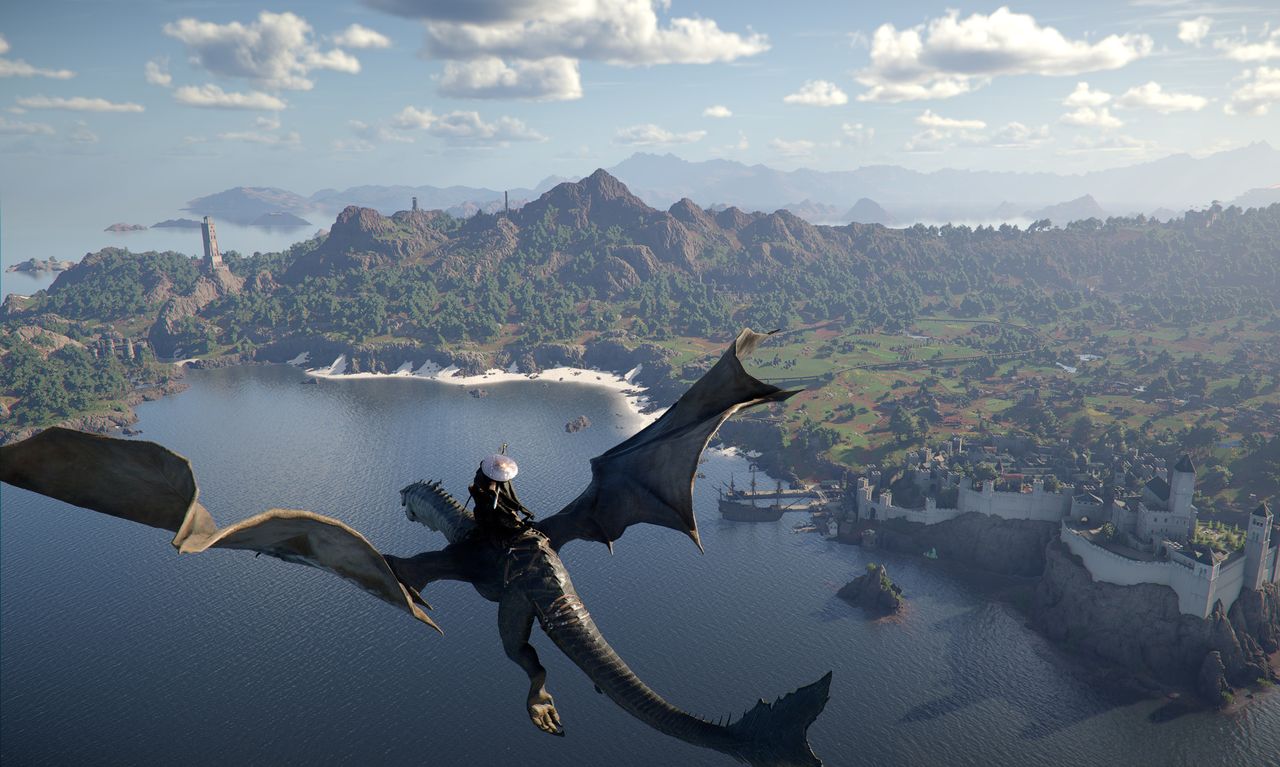
- You can climb, glide, or reach almost anything you can see.
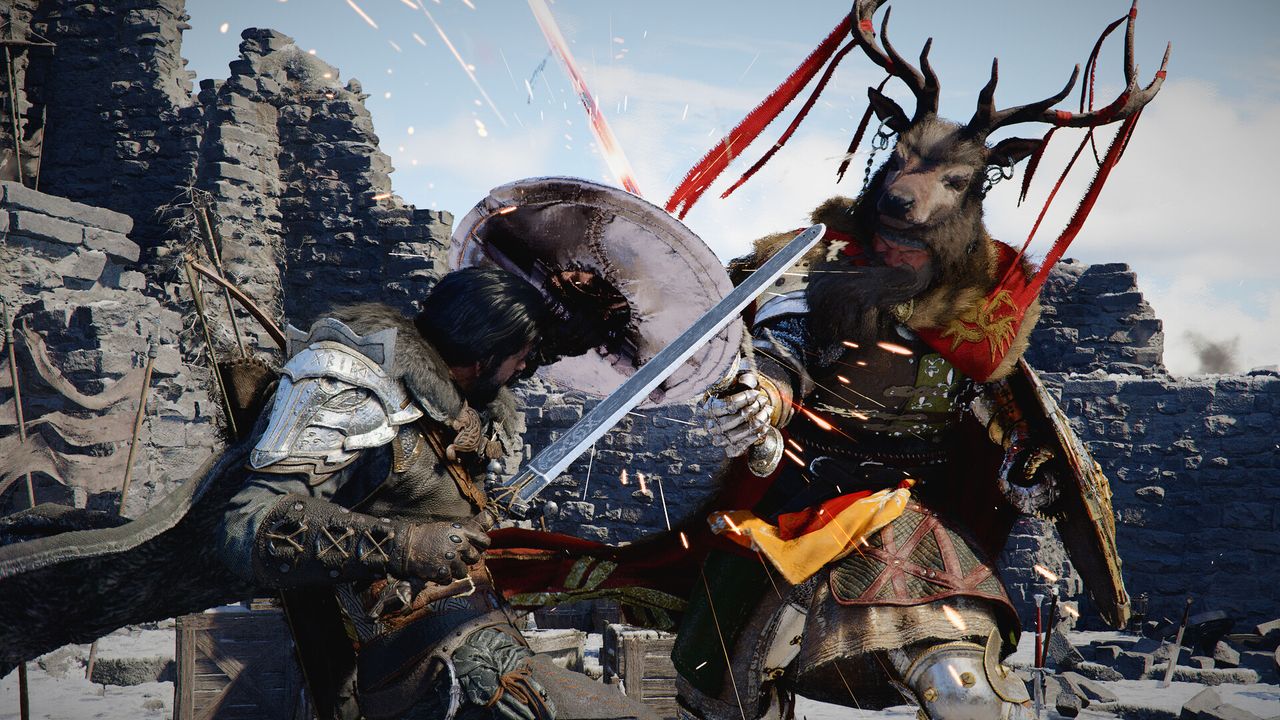
- Physics lets the environment become part of your toolkit, or your weapon.
- Combat does not force one correct solution.
- Side activities like fishing, crafting, and hunting fill out the world.
- The Greymane camp can be built up and improved over time.
- Crime only matters if NPCs actually see it happen.
- Quests often allow multiple player-driven solutions.
- Travel is shaped by mounts, climbing, and mobility tools.
- The game avoids locking you into a single path forward.
None of those ideas is brand new on its own. Other games have had busy maps, camp systems, stealth consequences, and lots of optional activities for years. What makes Crimson Desert stand out is the way those systems overlap and feed into each other. The game is less interested in asking what you are doing than in how you are doing it.
That is where it starts to feel different from the usual open-world formula. The game is not just about walking through a large space. It keeps nudging you to treat the world as something you can test, bend, and occasionally abuse. Kliff’s Axiom Force ability, which works a bit like Zelda: Tears of the Kingdom’s Ultrahand, only pushes that feeling further. The rules are there, but they feel more like suggestions than guardrails.
And sometimes, the game lets you try something it probably should not allow, then quietly makes it work anyway. Even Tears of the Kingdom, which is built around experimentation, does not reach quite the same level of improvised freedom.
Why the weak story stops mattering
That is why I have no trouble booting up Crimson Desert with no real plan. More often than not, I will open the map, think about what I should do next, and then decide the better move is to close it and simply go. The game is at its best when it is not forcing a schedule on you. Its strongest moments are the ones you stumble into.
It is also the kind of game where a quick trip across the map turns into five unrelated detours, and somehow that does not feel like a burden. Exploration keeps dragging you off the main route, and the detours are usually more interesting than whatever objective originally sent you there. That is not an accident. It is the design.
So yes, Crimson Desert would be better with a decent story. That part is not hard to admit. But it is also not really trying to be remembered for its plot. It is trying to be remembered for the way its world keeps answering back.
And in a genre that has spent years chasing bigger maps and longer task lists, that feels like a fair trade. When a game world is this responsive, this unpredictable, and this easy to get lost in, the story starts to matter less than the next thing you might discover by accident.
Release details
Crimson Desert was released on March 19, 2026. It was developed and published by Pearl Abyss. The game carries an ESRB Mature 17+ rating for Blood, Drug Reference, Intense Violence, and Strong Language.